From Field to Flask: The Overlooked Power of Heritage Grains in Premium American Spirits
For decades, the conversation surrounding premium American whiskey has centered on two dominant forces: the char of a new oak barrel and the mineral signature of a distillery's local water source. Both are legitimate contributors to a spirit's final character, and both have earned their place in the connoisseur's vocabulary. Yet a third variable—one that precedes the still, the barrel, and even the mash tun—has been quietly shaping the flavor of the nation's finest pours with considerably less fanfare. That variable is the grain itself.
A growing number of American distillers are no longer content to source commodity corn, rye, or wheat from industrial agricultural networks. Instead, they are turning to heirloom varieties, regionally adapted cultivars, and heritage grain strains that carry centuries of agricultural history within their cellular structure. The results, as both distillers and discerning drinkers are beginning to confirm, can be startling.
What "Heritage Grain" Actually Means
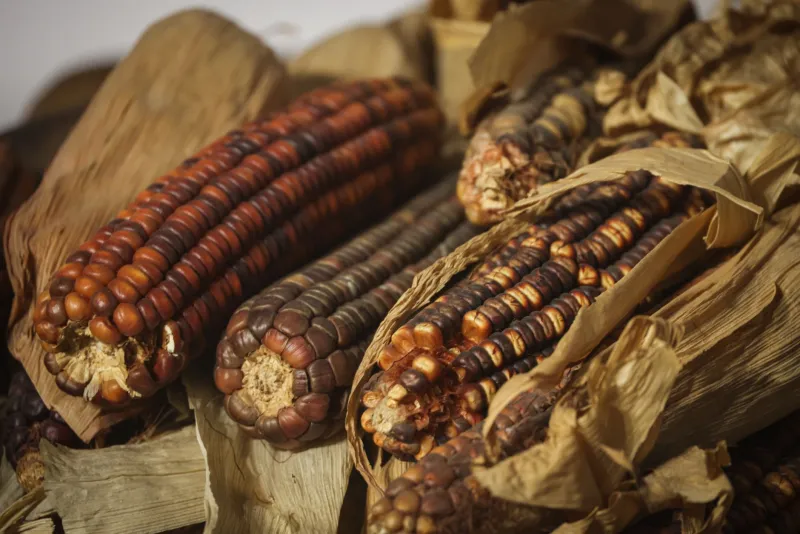
The term is used loosely in contemporary food and beverage culture, so precision matters here. Heritage grains are varieties that predate the industrialization of American agriculture—strains that were never subjected to the selective breeding programs designed to maximize yield, uniformity, and disease resistance at the expense of flavor complexity. Bloody Butcher corn, for instance, is a red-kerneled heirloom variety with roots in early American farming that produces a mash with distinctly earthy, almost savory undertones. Abruzzi rye, originally cultivated in the southeastern United States, delivers a spice profile that differs measurably from the commodity rye that fills most modern mashbills.
Regional agricultural variation compounds these differences further. The same variety of grain grown in Kentucky's limestone-rich soil will develop different starch and sugar profiles than the identical variety cultivated in the volcanic soils of the Pacific Northwest. Sunlight hours, rainfall patterns, and harvest timing all leave impressions on the grain's chemical composition—impressions that survive fermentation and distillation in ways that experienced palates can detect.
Why Distillers Have Been Reluctant to Lead With This Story
If grain sourcing exerts such a meaningful influence on flavor, one might reasonably ask why it has not already dominated the marketing conversation. The answer is partly commercial and partly logistical.
Commodity grains are predictable. They arrive in consistent quantities, at consistent specifications, and at prices that allow distilleries to plan production years in advance. Heritage grains, by contrast, are grown in smaller quantities by fewer farmers, are subject to greater harvest variability, and command a significant price premium. For a large-scale producer, these factors represent genuine operational risk. Even for craft operations, committing to a heritage grain supply chain requires establishing relationships with specialty growers—relationships that take time, trust, and financial investment to build.
There is also the matter of consumer education. Explaining the influence of barrel entry proof or cask finish requires relatively little background knowledge. Communicating why a specific corn variety grown in a specific county produces a spirit with a measurably different fatty acid profile is a more demanding conversation. Some distillers have simply concluded that the market is not yet ready for it.
But that calculus is shifting.
Voices From the Distillery Floor
Master distillers who have committed to heritage grain programs speak about the experience with a conviction that is difficult to dismiss. The common thread across many of these conversations is the concept of expressiveness—the idea that certain grain varieties simply have more to say.
One recurring observation is that heritage corns, in particular, tend to produce new make spirits with a more complex fatty acid and ester profile straight off the still. Where commodity yellow dent corn yields a relatively neutral, sweet distillate that relies heavily on barrel time for its personality, heirloom varieties often arrive with flavor precursors already in place. This does not diminish the role of wood aging, but it does mean that the barrel is working with richer raw material from the outset.
Rye programs tell a similarly compelling story. Distillers who have experimented with pre-Prohibition rye varieties—strains that were nearly lost to agricultural history before being preserved by seed banks and small-scale farmers—frequently describe a botanical complexity that modern commodity rye struggles to replicate. Floral notes, dried herb characteristics, and a particular kind of structured spice that lingers rather than fades are among the qualities most often cited.
Learning to Taste Grain Character
For the collector and connoisseur, the practical question is whether grain character can be reliably identified in the glass—particularly in blind tasting contexts where label information is unavailable. The honest answer is that it requires practice, but it is far from impossible.
A useful starting point is to seek out distilleries that publish detailed grain sourcing information and to taste their expressions side by side with comparable spirits made from commodity grains. Pay particular attention to the new make or white dog expressions when available, since these unaged spirits reveal grain character in its least obscured form. Notice the texture—heritage grains often produce a slightly oilier mouthfeel—and attend carefully to the mid-palate, where grain-derived esters tend to make themselves known before barrel-imparted vanillins and caramels take over.
In aged expressions, grain character tends to manifest as a kind of structural foundation beneath the wood notes. Spirits built on expressive heritage grains often exhibit a persistence on the finish that feels genuinely earned rather than artificially extended by high proof or heavy char.
The Investment Dimension
For those who approach premium spirits not only as pleasurable consumables but as collectible assets, grain provenance is becoming an increasingly relevant factor. Limited releases built on documented heritage grain programs—particularly those from distilleries with established relationships with named, traceable farms—carry a narrative specificity that resonates with serious collectors. These are spirits that cannot be replicated once a harvest year passes, once a farmer retires, or once a particular plot of land changes its cultivation practices.
In that sense, a bottle whose mashbill traces directly to a named heirloom corn variety grown on a specific farm in a specific season is not merely a beverage. It is a fixed record of an agricultural moment—a kind of edible terroir that happens to be bottled at proof.
A Frontier Worth Exploring
The spirits world has grown increasingly sophisticated in its appreciation of wood science, water chemistry, and fermentation microbiology. Grain sourcing represents the logical next chapter in that education—a dimension of flavor that rewards curiosity, demands attention, and consistently delivers surprises to those willing to engage with it seriously.
At Baron Spirits, we believe that the most rewarding relationship a collector can have with a fine spirit is one built on genuine understanding. Knowing what is in the glass, where it came from, and why it tastes the way it does transforms every pour from a passive experience into an informed one. The fields that produce the grain are, in the most literal sense, where a spirit's story begins. It is long past time to read it from the first page.