Age Before Excellence: Questioning the Sacred Myth of Vintage Superiority in American Whiskey
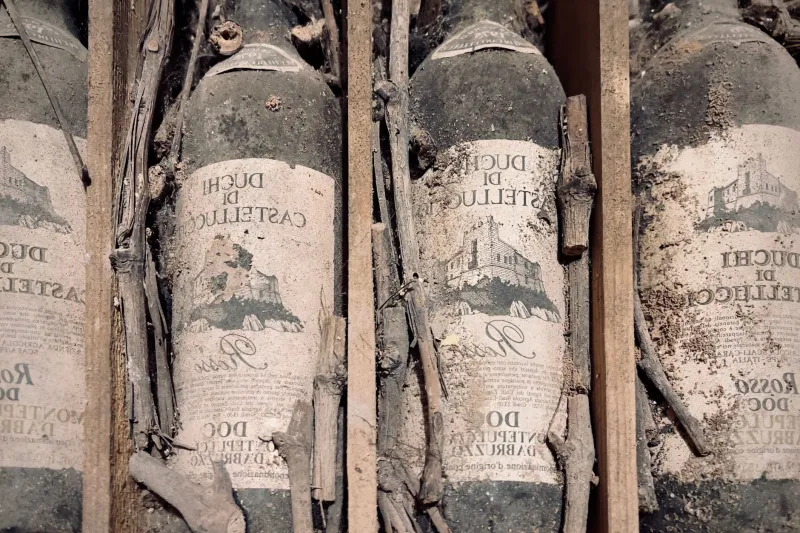
There is a particular reverence that settles over a room when a bottle from the 1960s or 1970s is placed on a tasting table. Voices lower. Pours are measured with unusual care. The assembled drinkers — many of them experienced, some of them expert — approach the glass with a posture that resembles devotion more than evaluation. This is the nostalgia trap at its most visible, and it costs collectors a great deal of money every year.
The assumption that older American whiskey is inherently superior is one of the most durable and least examined convictions in the spirits world. It shapes auction prices, drives secondary market speculation, and governs the way collectors talk about their most prized possessions. It also, with increasing regularity, fails to hold up under controlled scrutiny.
The Psychology Beneath the Patina
Age bias in spirits collecting is not simply a matter of ignorance. It is a deeply human response to scarcity, history, and the seductive power of narrative. A bottle produced before the consolidation of the American whiskey industry, before the lean years of the 1970s and 1980s when many distilleries cut corners or shuttered entirely, carries with it an implied authenticity. It represents a time when, collectors believe, things were done properly.
This belief is reinforced by the language of the market itself. Auction houses describe pre-Prohibition and mid-century bottlings with language that emphasizes provenance, rarity, and historical significance — all legitimate attributes, but ones that speak to a bottle's collectibility rather than its drinkability. The distinction matters enormously, and it is one the market has a financial incentive to obscure.
Cognitive psychology has a name for what happens when expectation reshapes perception: expectation assimilation. Studies in sensory science have demonstrated repeatedly that when tasters are told a whiskey is old, rare, or expensive, their reported experience shifts toward the positive — even when the liquid in the glass is identical to a sample they rated more modestly moments before. Vintage status functions as a flavor additive that exists entirely in the mind.
What Time Actually Does to Whiskey in a Bottle
Once a spirit is sealed in glass, it does not continue to develop the way it does in wood. This is a point that deserves more emphasis than it typically receives. The romance of cellared wine — in which extended bottle age can genuinely transform the liquid — does not translate directly to distilled spirits. Whiskey aged in a sealed bottle for thirty years is not, by that fact alone, a better whiskey than it was when it was bottled.
What time in glass can do, however, is introduce degradation. Oxidation through imperfect seals, ultraviolet light exposure, temperature fluctuation, and the slow migration of compounds through cork all alter a whiskey's chemical profile over decades. The results are unpredictable and frequently unflattering. Volatile aromatic compounds that define a whiskey's top notes dissipate. Certain esters break down. In extreme cases, century-old bottlings can present with flat, muted profiles that bear little resemblance to what the distillery intended.
This does not mean that all old whiskey is compromised. Storage conditions matter enormously, and well-preserved examples can be extraordinary. But the collector who pays a significant premium for an aged bottle is purchasing a probability, not a guarantee — and the odds are not always as favorable as the auction catalog implies.
Blind Tastings and the Collapse of Received Wisdom
Some of the most instructive moments in recent spirits evaluation have occurred when legendary vintage releases have been placed alongside contemporary expressions from the same distilleries in properly blinded formats. The results have not always been kind to the older bottles.
In multiple informal blind panels conducted by spirits writers and trade professionals over the past decade, modern expressions — benefiting from improved grain sourcing, more consistent barrel selection, and refined distillation technique — have matched or outperformed their vintage predecessors on technical merit. The vintage bottles, when identified, were invariably described in warmer terms by the same tasters who had rated them lower under blind conditions. The label, once revealed, did its work.
Distillers themselves have become increasingly candid on this subject. Several prominent figures in American whiskey production have noted publicly that the industry's technical capabilities today exceed what was possible in earlier decades. Yeast management, fermentation control, barrel entry proof optimization, and warehouse rotation practices have all advanced substantially. The romantic notion that old distilleries operated with a craft wisdom now lost to industrialization is, in many cases, precisely backward.
The Contemporary Challenge to Vintage Orthodoxy
A number of American craft distillers have begun positioning their work explicitly against the vintage mystique — not by dismissing history, but by inviting direct comparison. Several have released expressions designed to replicate historic mash bills and production methods, then submitted them to blind panels alongside the originals. The confidence required to make such an invitation is itself a form of argument.
Beyond the craft sector, established producers have invested heavily in single-barrel programs and limited releases that emphasize the quality of current production rather than the scarcity of the past. The implicit message is clear: what is being made now, under these conditions, with this level of attention, deserves to be evaluated on its own terms.
This does not mean the collector market for vintage spirits is irrational or without foundation. Genuinely well-preserved examples of historic American whiskey can offer flavor profiles that are simply unavailable in modern production — particular grain varieties, pre-regulation production methods, and the authentic character of a specific historical moment. These qualities have real value. The problem arises when the vintage premium becomes untethered from actual liquid quality and floats entirely on narrative.
A More Discerning Standard
The collector who wishes to navigate this landscape with genuine sophistication must be willing to do something that runs against the grain of the hobby: to evaluate vintage bottles with the same critical rigor applied to contemporary releases. This means seeking out blind tasting opportunities wherever possible, scrutinizing storage provenance with the same care given to distillery provenance, and resisting the powerful emotional pull of a compelling backstory.
It also means acknowledging that the most valuable thing in any bottle is what is actually in it — not what the label implies, not what the auction record suggests, and not what the mythology of a particular era demands. American whiskey has a rich and genuinely fascinating history. That history is worth studying, celebrating, and yes, collecting. But it is not worth paying for when the liquid it purportedly represents has been diminished by time, poor storage, or simple overestimation.
The nostalgia trap is not a sign of weakness in a collector. It is a sign of humanity. The discipline required to step outside it, to taste with clear eyes and an unencumbered palate, is what separates the accumulator of rare objects from the true connoisseur of rare spirits.