When Every Drop Is Rare, Nothing Is: The Collapse of Exclusivity in Limited-Edition Spirits
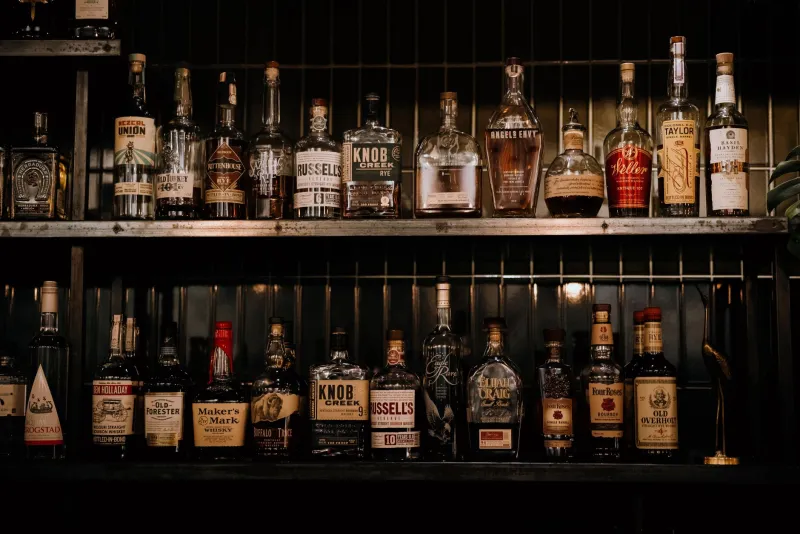
There was a time when a limited release meant something unambiguous. A distillery bottled what it had — constrained by the realities of aging inventory, regional distribution, and a modest consumer base that hadn't yet discovered bourbon as a cultural currency. Scarcity was an accident of production, not a strategy meeting agenda item. That era has passed with remarkable finality.
Today, the American spirits market releases hundreds of "limited edition" expressions annually. Virtually every major distillery — and a significant number of craft operations — maintains a rotating portfolio of allocated, numbered, or otherwise restricted bottlings. The word rare appears on shelf talkers, press releases, and auction listings with such frequency that it has begun to hollow itself out entirely. When scarcity becomes a marketing template, it ceases to function as meaningful information.
For the serious collector, this transformation is not merely an inconvenience. It represents a fundamental recalibration of how value is determined, how portfolios are assembled, and how trust is established with producers.
The Architecture of Manufactured Scarcity
To understand what has happened to limited releases, it helps to examine the mechanics of how they are constructed. A distillery need not produce a small quantity to create an allocation bottling — it need only release a small quantity at a time. Staggered drops, regional exclusives, and retailer-specific allocations can transform a relatively abundant product into one that appears perpetually out of reach.
This is not inherently deceptive. Controlled distribution serves legitimate logistical and brand-management purposes. But the effect on the market is to simulate scarcity without the underlying conditions that historically justified premium pricing: genuinely finite stock, irreproducible source material, or meaningful age and provenance.
The secondary market has responded accordingly. Bottles that command multiples of their retail price at release often soften considerably within twelve to eighteen months as the artificial tension dissipates. A $60 bottle that briefly traded at $400 on secondary platforms is not, by any defensible measure, a $400 bottle. It is a $60 bottle with a well-executed launch strategy.
What Genuine Rarity Actually Looks Like
Authentic scarcity has a different texture than its manufactured counterpart, and experienced collectors learn to recognize the distinction through a combination of historical knowledge and market literacy.
True rarity tends to originate in circumstances that cannot be replicated: a distillery that has since closed, a particular harvest year with exceptional grain characteristics, a cask fill from a master distiller who is no longer active, or a bottling whose entire production run was consumed by export markets before the domestic collector community took notice. These conditions are not engineered — they are discovered after the fact, often years after the original release.
Distilleries with genuine legacy — those operating continuously for decades with documented production records — produce limited expressions whose value is anchored in verifiable history. A 25-year expression from a Kentucky distillery with an unbroken lineage occupies a categorically different position than a "small batch" release from a three-year-old operation whose inventory constraints are a function of youth rather than intentional curation.
The collector who distinguishes between these two categories is not being cynical about craft producers. Many newer distilleries are producing work of genuine merit. The point is that merit and rarity are distinct qualities, and conflating them is precisely the confusion that sophisticated marketing is designed to encourage.
Navigating the Allocated Landscape
For those building a collection with both personal enjoyment and long-term value in mind, a few principles have emerged as reliable guides through an increasingly crowded field.
Prioritize provenance over packaging. The visual language of premium spirits — heavy bottles, embossed labels, numbered certificates — has become sufficiently standardized that it no longer functions as a reliable signal of quality or genuine scarcity. What matters is the documented history behind the liquid: the distillery's founding date, the aging conditions, the bottling records, and the reputation of the individuals responsible for the blend or single-barrel selection.
Understand the difference between allocation and rarity. A bottle that is difficult to obtain through normal retail channels is allocated. A bottle that represents a genuinely finite quantity of irreplaceable liquid is rare. These categories occasionally overlap, but they are not synonymous. Allocated bottles can become rare over time as stock depletes; rare bottles are not always allocated at release. Treating these terms as interchangeable is one of the more expensive errors a collector can make.
Track secondary market behavior over time. A bottle whose secondary price remains stable or appreciates steadily over several years is demonstrating genuine collector demand independent of launch hype. A bottle whose secondary price peaks at release and declines thereafter is reflecting marketing momentum, not intrinsic value. Patience in observation is among the most useful tools available to the serious buyer.
Develop relationships with knowledgeable retailers. In the current environment, the most reliable access to genuinely scarce expressions comes through established relationships with retailers who possess both deep inventory knowledge and the professional incentive to be honest about what they are selling. A retailer who distinguishes candidly between a marketing-driven limited release and a bottle with genuine long-term significance is an asset worth cultivating.
The Collector's Responsibility
There is a dimension of this conversation that extends beyond market strategy. The proliferation of manufactured scarcity is, in part, a response to demand that collectors themselves have generated. When the secondary market rewards launch-day scarcity with immediate price premiums regardless of the underlying liquid's merit, it creates incentives for producers to optimize for that moment rather than for the long-term integrity of their portfolio.
The most effective counterforce is informed purchasing. A collector community that applies consistent, rigorous standards — that declines to reward packaging theater with secondary premiums, that asks pointed questions about production volume and aging documentation, that measures prestige by verifiable criteria rather than marketing narrative — exerts genuine pressure on producers to earn the designation of rarity rather than simply claim it.
This is not a counsel of suspicion toward the spirits industry, which contains producers of extraordinary integrity alongside those operating with less scrupulous intentions. It is, rather, an argument for the kind of discernment that has always defined the serious collector: the willingness to look past the surface of a presentation and ask what, precisely, is being offered.
Rarity Reclaimed
The paradox at the center of the modern limited-release market is that abundance has made genuine scarcity more valuable, not less. In a landscape where every other release arrives with allocation fanfare and numbered bottles, the expressions that represent authentic rarity — constrained by history, geography, or the irreversible passage of time — stand apart with greater clarity than ever.
The work of the discerning collector is to find them, and to resist the considerable pressure to mistake everything else for their equivalent.