To Break the Seal or Hold the Line: The Collector's Most Consequential Choice
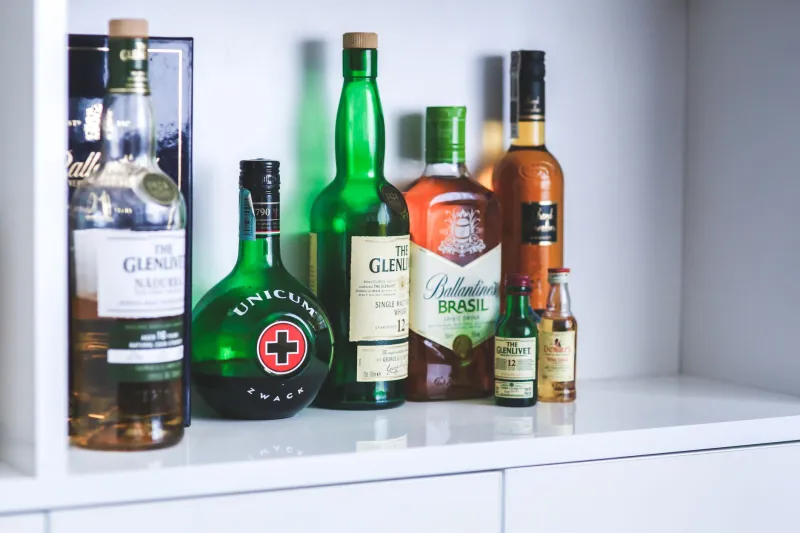
There is a particular kind of paralysis that visits even the most seasoned spirits collectors. It arrives quietly, usually on an otherwise ordinary evening, when a hand reaches toward a shelf and pauses mid-air before a bottle that has waited, sealed and patient, for years. The question it poses is deceptively simple: Do I open this?
The answer, as any honest collector will admit, is anything but.
In the world of rare and allocated spirits, the decision to uncork a prized bottle occupies a strange intersection of economics, psychology, and personal philosophy. It is a moment that collapses the future into the present — and, depending on the bottle in question, it may carry financial consequences that rival far more conventional investment decisions.
The Bottle as Financial Instrument
The secondary market for rare American whiskey has matured considerably over the past decade. Bottles that once moved quietly between enthusiasts on private Facebook groups now command serious attention from auction houses, with some expressions regularly fetching multiples of their original retail price. A sealed bottle of Pappy Van Winkle 23-Year, for instance, has traded on secondary platforms for well above $3,000. Certain releases from Buffalo Trace's Antique Collection, Michter's Celebration Sour Mash, and limited expressions from craft distilleries such as Willett and Four Roses have demonstrated similar trajectories.
For collectors who acquired these bottles at or near retail — often through years of cultivated relationships with retailers and distributors — the paper appreciation can be staggering. Opening such a bottle does not merely consume a spirit; it liquidates an asset. The financial opportunity cost of that decision is real, measurable, and permanent.
Yet the calculus is rarely so clean.
What the Market Doesn't Capture
Spirits, unlike equities or real estate, do not generate yield while they wait. A sealed bottle of rare bourbon sitting in a temperature-controlled cabinet produces no dividends, no rental income, no compounding interest. Its value is entirely contingent on future demand, market sentiment, and the continued relevance of the producer's reputation — all of which are subject to forces well beyond any collector's control.
Moreover, whiskey does not improve indefinitely once bottled. Unlike wine, which can evolve meaningfully in the bottle under the right conditions, distilled spirits are largely stable after bottling. The liquid inside a bottle of 2012 Pappy today is, chemically speaking, the same liquid it was the day it left the distillery. Age statements on whiskey labels refer to time spent in the barrel, not time spent in glass. A collector who defers the experience indefinitely is not waiting for the whiskey to improve — they are simply waiting.
This distinction matters enormously when weighing the decision to open.
Two Collectors, Two Regrets
The emotional texture of this dilemma is perhaps best understood through those who have lived it from both sides.
A collector based in Nashville — who asked to be identified only by his first name, Richard — spent nearly eight years accumulating a focused collection of allocated bourbon, including multiple vintages of George T. Stagg and a small library of single-barrel private selections. When a significant life event prompted him to open a bottle he had held for six years, the experience was, by his account, transcendent. "It was exactly what I'd imagined," he said. "But within eighteen months, that same expression had tripled on the secondary market. I think about that sometimes."
His regret, notably, is not that he opened the bottle. It is that he opened only one.
The counterpoint arrives from a collector in Chicago, who describes herself as having "over-optimized for preservation." Having spent years building a collection she was reluctant to touch, she found herself, at sixty-two, surveying a cabinet full of bottles she had never tasted. "I kept waiting for the right occasion," she explained. "Eventually I realized I had been collecting experiences I never intended to have. That's not a collection. That's a warehouse."
Her regret is the inverse: not financial loss, but the quiet accumulation of unlived moments.
Recognizing What a Bottle Is Actually For
Practical guidance on this question requires a collector to be honest about their own intentions — a task that sounds straightforward but rarely is.
Certain bottles are, by their nature, investment vehicles. Limited commemorative releases, distillery-exclusive expressions produced in very small quantities, and bottles tied to culturally significant moments tend to appreciate based on scarcity and narrative. These are instruments for which the secondary market provides genuine liquidity, and holding them sealed carries a defensible financial rationale.
Other bottles — even expensive, allocated ones — are fundamentally experiential objects. They were produced to be consumed, and their value to the individual collector is almost entirely sensory. Attempting to treat an experiential bottle as a financial instrument often produces the worst of both outcomes: the collector neither enjoys the spirit nor realizes meaningful appreciation.
A useful framework is to ask, at the moment of acquisition, whether the bottle would be purchased at its current secondary market price if it were already open. If the answer is no — if the appeal is the liquid rather than the sealed collectible — the bottle is almost certainly meant to be opened.
The Opportunity Cost of the Unopened Life
There is a broader philosophical dimension to this conversation that the spirits world occasionally surfaces with unusual clarity. Rare whiskey, more than perhaps any other collectible category, exists in productive tension with its own consumption. A painting withheld from view still exists as a painting. A sealed bottle of extraordinary bourbon, withheld indefinitely from the glass, exists as something increasingly abstract — a symbol of an experience perpetually deferred.
The most sophisticated collectors tend to arrive, eventually, at a portfolio approach: a portion of their holdings treated with genuine investment discipline, held sealed and climate-controlled against future appreciation; and a portion designated explicitly for consumption, approached with the same intentionality they bring to acquisition. This division does not resolve the tension so much as it honors it — acknowledging that both impulses, toward preservation and toward experience, are legitimate expressions of what it means to engage seriously with rare spirits.
The Moment of Decision
When that hand pauses before the shelf, it is worth remembering that the rarest thing in any collection is not the liquid in the bottle. It is the occasion that makes opening it meaningful — the gathering, the conversation, the particular quality of an evening that transforms a fine spirit into a memory worth carrying.
Markets fluctuate. Appreciation is never guaranteed. But a bottle opened at precisely the right moment, shared with precisely the right people, yields a return that no secondary platform has yet found a way to price.
Knowing when that moment has arrived is, ultimately, the collector's highest art.