Fakes in the Vault: A Collector's Guide to Authenticating Rare Spirits Before They Cost You Everything
For decades, the rare spirits market operated on something close to an honor system. Provenance was established through reputation, handshakes, and the quiet assurances of trusted dealers. That era is over. As bottles of Pappy Van Winkle, vintage Scotch single malts, and pre-Prohibition American rye command prices in the tens of thousands of dollars, a parallel economy has emerged — one built entirely on deception.
The counterfeit spirits trade is no longer the domain of crude opportunists slapping photocopied labels onto well-known bottles. Today's forgers are meticulous craftsmen operating with access to sophisticated printing technology, chemical knowledge, and a global distribution network capable of moving product seamlessly through secondary markets. For American collectors, the stakes have never been higher.
The Economics Behind the Forgery Trade
To understand why counterfeit spirits have proliferated so aggressively, one need only examine the price trajectory of the bottles being faked. A standard retail release of Buffalo Trace Antique Collection products — including William Larue Weller and George T. Stagg — carries a suggested retail price of roughly $100. On secondary markets, those same bottles routinely fetch $1,500 to $3,000. Across the Atlantic, rare expressions of Macallan and Springbank can sell for five figures at auction.
Where extraordinary margins exist, fraud follows. Organized criminal operations — many of them traced to Eastern Europe and Southeast Asia — have identified luxury spirits as a high-reward, relatively low-risk enterprise. Unlike narcotics, penalties for spirits counterfeiting in many jurisdictions remain comparatively modest. The profit margins, however, are anything but.
A convincing fake bottle of a $5,000 whisky might cost a sophisticated forger less than $200 to produce. Multiply that across hundreds of units and the financial incentive becomes starkly apparent.
How Forgers Work: The Anatomy of a Fake
The most rudimentary counterfeits involve refilling authentic empty bottles with inferior spirits — a practice that exploits the collector habit of retaining original packaging. More sophisticated operations source original bottles through bar networks and recycling channels, clean them, and replace the contents with blended spirits engineered to approximate the original's flavor profile.
Labels represent a critical vulnerability. Early counterfeits were often betrayed by printing inconsistencies: slight color variations, font irregularities, or paper stock that didn't match period production. Modern forgers, however, have access to high-resolution scans and commercial-grade printing equipment capable of reproducing even the subtle embossing and foil elements found on premium releases.
Capsules — the wax, foil, or heat-shrink coverings over bottle closures — have become a particular focus of authentication efforts. Legitimate producers often incorporate proprietary capsule designs, specific wax formulations, or sequential serial numbers that are difficult to replicate at scale. Skilled forgers study these details obsessively, though imperfections frequently remain for the trained eye.
Case Studies: When the Experts Were Fooled
In 2017, a Swiss collector paid the equivalent of roughly $14,000 for a bottle purportedly containing a 1878 Macallan. After authentication testing commissioned by the Scotch Whisky Research Institute, radiocarbon dating revealed the spirit inside had been distilled no earlier than the 1970s. The bottle itself was genuine; the contents were not. The case sent a clear signal to the auction world: even impeccable provenance documentation cannot guarantee authenticity of what lies within.
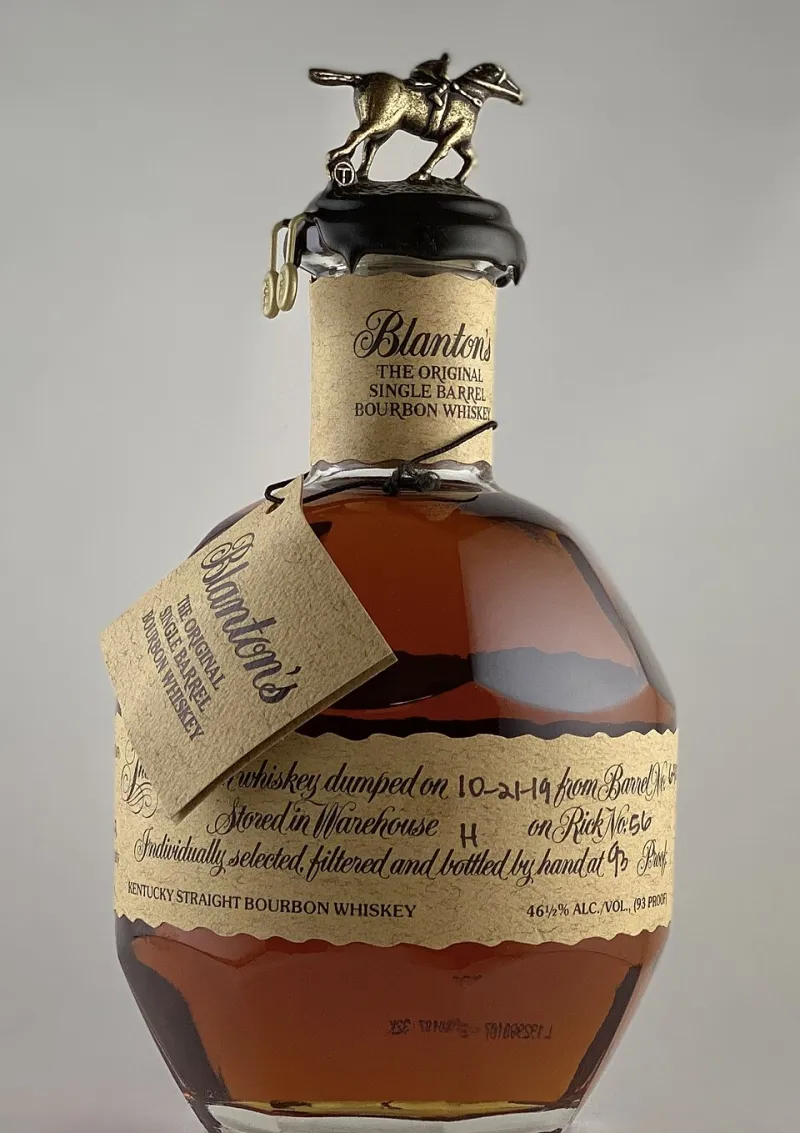
Closer to home, American collectors have encountered fraudulent bottles of Blanton's Gold, Jefferson's Presidential Select, and various expressions from the Van Winkle family. In several documented instances, buyers on secondary market platforms received bottles with subtly incorrect typography on the labels — errors only apparent when compared directly against verified originals. Many of these buyers had no such reference point.
Perhaps most troubling was a 2021 case involving a California-based auction house that unknowingly listed multiple bottles of counterfeit Japanese whisky. The lots cleared without incident, only to be flagged weeks later by a buyer who noticed discrepancies in the bottle glass weight. The auction house subsequently implemented new third-party verification protocols — a response that has since become something of an industry standard.
Authentication Techniques Every Serious Collector Should Know
The good news is that authentication, while not infallible, has become considerably more rigorous. Collectors willing to invest time and, in some cases, modest expense can substantially reduce their exposure.
Physical Examination Begin with the bottle itself. Examine the glass for mold seams, pontil marks, and weight consistency. Legitimate bottles from established distilleries are manufactured to precise tolerances; counterfeit glass often feels slightly different in the hand. Fill levels should correspond to documented standards for a given release — evaporation in genuinely aged bottles follows predictable patterns, and suspiciously high fill levels on old bottles warrant scrutiny.
Label and Typography Analysis Acquire a verified reference bottle or high-resolution reference images before purchase. Compare font weights, kerning, and the precise placement of regulatory text. American spirits labels are required by the TTB (Alcohol and Tobacco Tax and Trade Bureau) to include specific information in mandated formats — deviations from these requirements can indicate a fake, though sophisticated forgers are often aware of these standards.
Capsule and Closure Integrity Inspect wax capsules for uniformity and color consistency. Many premium American producers use proprietary wax blends that exhibit specific visual characteristics. Foil capsules should bear clean, consistent embossing. Any evidence of resealing — small tears, adhesive residue, or uneven application — is a significant red flag.
Spectroscopic and Chemical Testing For high-value acquisitions, non-invasive testing has become increasingly accessible. Near-infrared spectroscopy and laser-based analysis can assess the spirit's chemical composition through the sealed bottle, identifying signatures inconsistent with the claimed distillery or vintage. Several firms now offer these services to private collectors at fees that are modest relative to the value of bottles being authenticated.
Provenance Verification Demand complete documentation. Receipts, auction records, and chain-of-custody documentation should be traceable and verifiable. Be particularly cautious of bottles offered without clear provenance history, regardless of how compelling the price may appear.
Where the Market Is Responding
The spirits industry has not been passive in the face of this challenge. Several major distilleries have introduced serialized QR codes, NFC chips embedded in labels, and blockchain-based provenance tracking designed to create an immutable record for each bottle. Pernod Ricard and LVMH have both piloted such technologies across portions of their premium portfolios.
Reputable auction houses — including Sotheby's Wine and Skinner — have formalized authentication review processes, engaging independent experts before any significant lot is listed. Secondary market platforms operating in the United States have similarly tightened seller verification requirements, though the peer-to-peer nature of many transactions continues to create exposure.
The Collector's Responsibility
Ultimately, the burden of diligence rests with the buyer. The rare spirits market rewards knowledge, patience, and healthy skepticism. Acquiring from established retailers with verifiable histories, engaging authentication services for significant purchases, and cultivating relationships with trusted experts within the collector community are not optional precautions — they are the baseline expectations of serious participation in this market.
The counterfeit crisis has not diminished the extraordinary appeal of rare spirits as collectibles and investments. It has, however, irrevocably altered the conditions under which that market must operate. Those who adapt their practices accordingly will find that the pursuit of genuine rarity remains as rewarding as ever. Those who do not may find their vaults contain something considerably less than what they bargained for.