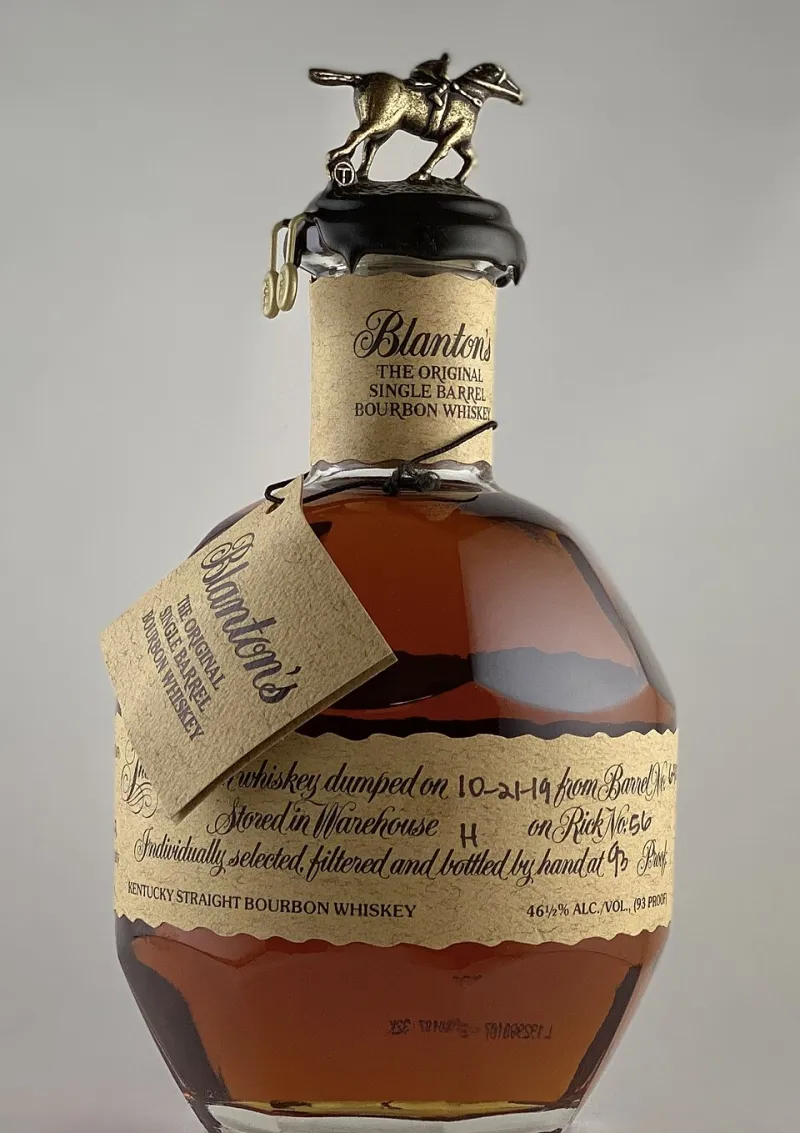
The Living Archive: How to Build and Conduct a Vertical Whiskey Collection Across Vintages
Consider, for a moment, the difference between a library and a bookshelf. Both hold volumes. Both occupy space in a home. But a library is organized, intentional, and cumulative — each acquisition building upon the last toward a coherent body of knowledge that reveals more about its subject the more thoroughly it is explored. The finest whiskey collections operate on precisely this principle, and nowhere is that philosophy more elegantly expressed than in the vertical archive.
A vertical whiskey collection — the systematic acquisition of annual releases from a single distillery across multiple consecutive vintages — is one of the most intellectually demanding and ultimately rewarding disciplines available to the American spirits enthusiast. It is also one of the least understood. While the broader culture of whiskey collecting has grown dramatically over the past decade, most collectors still approach the practice horizontally, chasing breadth across distilleries, regions, and styles. The vertical collector works in a different dimension entirely, trading variety for depth and accumulating something that no single bottle, however rare, can provide: context.
Why Vertical Collections Tell Stories That Single Bottles Cannot
Every annual release from a distillery is, in a meaningful sense, a document. It records the grain sourcing decisions made three, five, or twelve years prior. It reflects the judgment of a master distiller who may or may not still hold that position today. It captures the influence of a specific cohort of barrels that experienced a particular sequence of Kentucky summers and winters, or the damp, cool conditions of a Pacific Northwest warehouse. No two vintages of even the most consistent expression are identical.
When those vintages are tasted side by side — a practice that requires the patience to acquire them sequentially and the discipline to leave them undisturbed until a meaningful body of releases has been assembled — the differences between them become the story. A vertical tasting might reveal a subtle but persistent shift in grain bill following a change in grain suppliers. It might illuminate how a distillery's production philosophy evolved after new ownership arrived, or how a particularly warm aging season in the American South concentrated certain barrel compounds in ways that produced an anomalously rich vintage.
These are observations that simply cannot be made from a single bottle, however extraordinary. The vertical collector is, in the truest sense, a custodian of a distillery's history — one who has taken on the responsibility of preserving and interpreting that history in liquid form.
Choosing Your Subject
The selection of a distillery around which to build a vertical archive is perhaps the most consequential decision a collector will make, and it deserves considerably more deliberation than most enthusiasts give it. Several criteria merit careful evaluation.
Longevity and consistency of release are foundational. A distillery that has produced a clearly identified annual limited release — whether a single barrel program, a seasonal expression, or a named vintage series — for at least a decade provides the most fertile ground for vertical collection. Distilleries with erratic release schedules, frequently renamed expressions, or a history of significant formula changes introduce discontinuities that complicate meaningful comparison.
Transparency in production documentation is equally important. Distilleries that publish or make available information about grain sourcing, barrel entry proof, aging duration, and warehouse selection by vintage allow the collector to correlate sensory observations with production data — a practice that transforms tasting notes from subjective impressions into something approaching empirical analysis.
Finally, consider the distillery's trajectory. A well-established American producer with a proven track record of quality and a stable ownership structure offers greater confidence that the vertical you begin building today will still be worth completing a decade from now. Emerging craft distilleries present higher risk alongside higher potential reward — the possibility of documenting a distillery's formative years from the very beginning is genuinely compelling, but it requires a tolerance for the volatility that characterizes young operations.
Acquisition Strategy and the Patience It Demands
The mechanics of building a vertical collection are deceptively straightforward: acquire one or more bottles of each annual release as they become available, and resist the temptation to open them prematurely. In practice, this requires both financial discipline and a degree of organizational rigor that separates serious collectors from casual enthusiasts.
For distilleries with allocated releases — expressions distributed through lottery systems, distillery-direct sales, or tightly managed retail channels — the acquisition process begins well before the release date. Establishing relationships with reputable retailers, joining distillery mailing lists, and participating in official allocation programs are all essential steps. The secondary market, while useful for filling gaps in a collection, should be approached with caution: provenance verification is critical, and the premium prices commanded on secondary platforms can quickly erode the financial logic of the endeavor.
Buying in multiples where budget allows is a prudent strategy. For each vintage, acquiring at least two bottles — one to eventually open for tasting, one to preserve sealed — ensures that the archive maintains its integrity while still serving its primary purpose as a sensory record. Some dedicated collectors maintain three bottles per vintage: one for tasting, one for long-term storage, and one as a contingency against the inevitable accidents of time.
Storage as Stewardship
Proper storage is not a secondary concern for the vertical collector — it is an ethical obligation. A collection assembled over a decade and stored carelessly is an archive corrupted. The investment of time, capital, and intention that a vertical collection represents demands storage conditions that will preserve each bottle in precisely the state in which it was acquired.
Temperature consistency is paramount. Whiskey in a sealed bottle does not age in the way that wine does — the spirit's maturation effectively ceases once it leaves the barrel — but temperature fluctuation causes the liquid to expand and contract, stressing the seal and potentially allowing oxidation to compromise the contents over time. A stable environment between 55 and 65 degrees Fahrenheit is ideal; the precise temperature matters less than its consistency.
Light exposure is the second major threat. Ultraviolet radiation degrades organic compounds in whiskey, subtly altering color and flavor over extended periods. Dark storage — a dedicated cabinet, a temperature-controlled room, or a purpose-built spirits cellar — is strongly preferred over open display shelving, regardless of how aesthetically satisfying the latter may appear.
Bottles should be stored upright. Unlike wine, whiskey's high alcohol content can degrade cork if maintained in prolonged contact, and horizontal storage provides no maturation benefit for bottled spirits. Keep records — physical or digital — of acquisition date, purchase source, and any available production documentation for each bottle. This metadata transforms a collection of bottles into a properly catalogued archive.
Conducting the Vertical Tasting
The vertical tasting is the culminating ritual of the collector's discipline, and it rewards careful preparation. Select a minimum of three consecutive vintages for comparison — five or more reveals patterns that smaller sets cannot. Taste in chronological order, beginning with the oldest available vintage, and allow each whiskey sufficient time in the glass before evaluation; fifteen to twenty minutes of open air exposure will allow volatile compounds to dissipate and the more complex mid-palate notes to emerge.
Document observations systematically. Note color, nose, palate, and finish for each vintage, but attend particularly to the differences between them — the places where one year diverges from the next. These divergences are the data points from which the distillery's story is assembled. Over time, patterns will emerge: a house style that deepens and clarifies across vintages, or a moment of transition that marks a change in the distillery's philosophy or personnel.
Share the experience selectively. A vertical tasting conducted with two or three fellow collectors of comparable seriousness generates a quality of conversation that is simply unavailable in any other context. The shared act of tracing a distillery's evolution across years — bottle by bottle, glass by glass — is one of the most sophisticated pleasures that American whiskey culture has to offer.
The vertical archive is, ultimately, an act of faith: faith that the distillery will continue to produce work worthy of documentation, and faith in one's own future self to one day sit down with a flight of carefully preserved bottles and understand, with genuine clarity, what they collectively mean.