When the Label Goes Dark: What Blind Tastings Reveal About Prestige, Pricing, and Perception
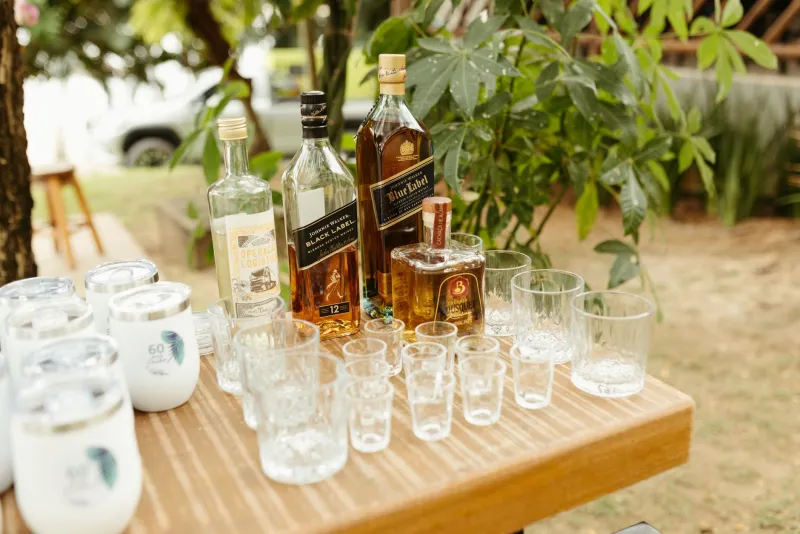
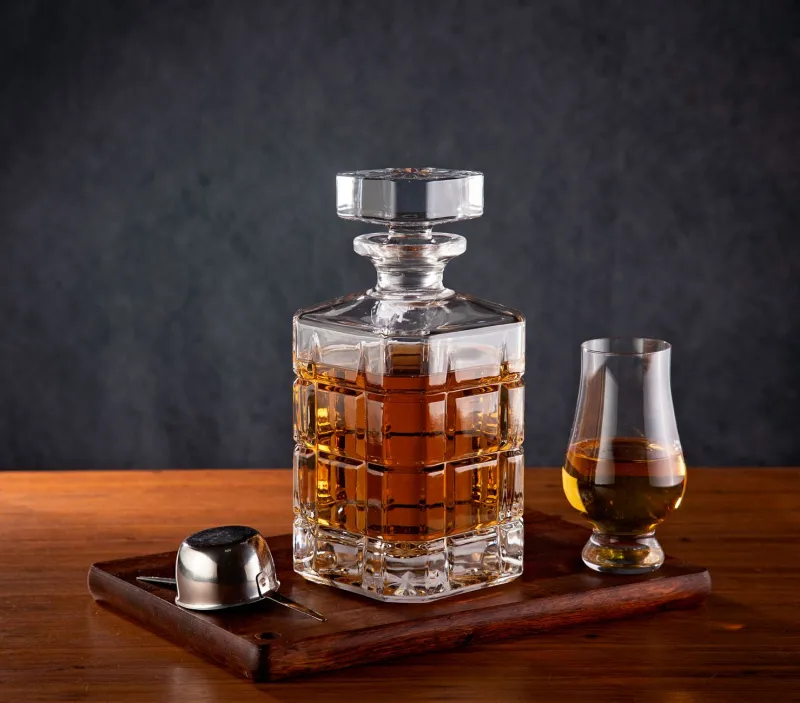
Remove the label from a five-hundred-dollar bottle and something uncomfortable happens: the spirit must justify itself entirely on its own terms. The visual cues — the embossed glass, the weighted stopper, the distillery's name rendered in gilt — have always done considerable work in shaping the drinker's experience. Strip them away, and you are left with liquid and perception, unmediated by brand architecture.
Blind tasting experiments conducted across the premium spirits market have repeatedly produced results that challenge the assumptions underlying collector valuations — and, in doing so, raise questions that the industry has been slow to answer honestly.
What the Research Consistently Shows
The academic literature on sensory perception and pricing is unambiguous on one point: prior knowledge of price and brand materially alters the reported experience of a beverage. In studies conducted at institutions including the California Institute of Technology, subjects reported significantly greater pleasure from wines they believed to be expensive, even when the liquid was identical to a cheaper alternative. The brain's reward circuitry, it appears, is activated not only by the sensory properties of what is consumed but by the narrative surrounding it.
The premium spirits market is not immune to this dynamic. Informal blind tastings conducted by enthusiast communities, spirits writers, and competition panels across the United States have produced results that would unsettle many collectors. High-allocation bourbons trading at multiples of their retail price have, in anonymous format, failed to outperform expressions available for a fraction of the secondary market cost. Celebrated single malts have been outscored by craft distillery releases that carry none of the prestige infrastructure of their Scottish counterparts.
These outcomes are not universal, and it would be intellectually dishonest to suggest that price and quality are entirely uncorrelated. They are not. Exceptional spirits do exist at the higher end of the market, and many command their premiums legitimately. But the correlation is weaker, and more variable, than the collector market's pricing behavior tends to imply.
The Anatomy of a Blind Tasting
To appreciate what blind tastings actually measure, it is worth understanding what they eliminate. When a taster approaches a labeled bottle, they bring with them an accumulated weight of association: the distillery's reputation, the publication scores the expression has received, the social significance of having acquired it, the price paid. These factors do not merely color the experience — they actively reconstruct it. The mind is not a passive recorder of sensory data. It is an interpreter, and it interprets within a context.
A properly conducted blind tasting removes that context. Bottles are coded, poured by a neutral party, and evaluated without any identifying information. The taster has access only to what is in the glass. The results, under these conditions, tend to be both more honest and more surprising than most participants anticipate.
Several notable findings emerge consistently from structured blind evaluations in the American market. First, textural richness — the weight, viscosity, and mouthfeel of a spirit — tends to be a stronger driver of positive evaluation than flavor complexity alone. Second, finish length is reliably appreciated, but finish quality is a more discriminating metric that tasters rarely apply with precision unless specifically prompted. Third, and perhaps most significantly, the expressions that perform best in blind format are frequently those that achieve balance rather than those that lead with a single dominant characteristic.
What This Means for the Collector
For those who approach spirits as both a sensory pursuit and an investment, the implications of blind tasting research are worth sitting with carefully.
The secondary market for rare American whiskey operates on a logic that is only partially sensory. Scarcity, cultural cachet, social proof, and narrative value all contribute to pricing in ways that have little to do with what is in the bottle. This is not, in itself, a criticism — the same dynamics govern the fine art and vintage wine markets, and there is nothing inherently illegitimate about valuing rarity and provenance alongside liquid quality. A bottle of allocated bourbon that represents a specific moment in American distilling history carries meaning that transcends the tasting note.
However, collectors who have never subjected their prized acquisitions to anonymous evaluation may be surprised by what they find. The expression that commands the most social currency in a given season is not always the one that performs most compellingly in the glass. And the craft distillery release acquired for eighty dollars may, in blind format, outperform the secondary market trophy that cost six times as much.
The discipline of blind tasting is not an argument against collecting premium spirits. It is an argument for collecting them with clear eyes — understanding which elements of value are sensory and which are narrative, and making acquisitions that consciously account for both.
The Paradox at the Center
Here is where the blind tasting exercise becomes genuinely paradoxical: even those who conduct these evaluations regularly do not subsequently abandon their preference for labeled bottles. The experience of drinking a fine spirit is, inescapably, a holistic one. The provenance, the history, the relationship with the producer, the occasion — these are not irrelevant embellishments. They are part of the experience itself.
The value of blind tasting, then, is not to strip spirits of their narrative dimension but to ensure that the narrative is earned. When a taster who has genuinely evaluated an expression in anonymous format subsequently learns its identity and finds that their assessment aligns with the spirit's reputation, the confidence they can place in that reputation is substantively greater than it would otherwise be.
At Baron Spirits, we believe that the most discerning collectors are those who have done both: who have sat with a spirit in silence, without its label to guide them, and found it worthy — and who then appreciate the full weight of its story with all the more conviction for having done so. The label, at its best, is not a substitute for quality. It is a confirmation of it.