Ghost Batches: The Exceptional Spirits America's Distillers Chose to Bury
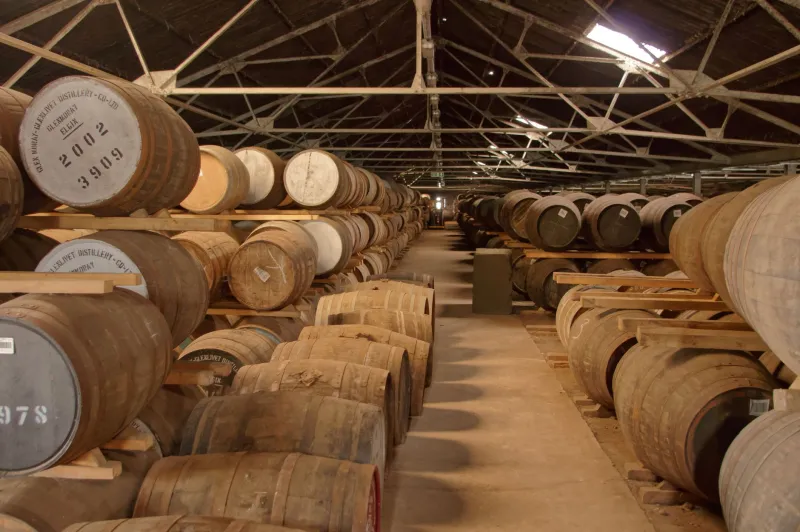
There is a particular kind of grief known to those who work closely with whiskey. It is not the grief of a bad batch—those losses are expected, even instructive. It is the grief of something genuinely extraordinary sitting in a rickhouse with no future, destined for the blending tank or the drain rather than a bottle with a label. Across America's distilling landscape, these spirits exist in surprising numbers: exceptional expressions that, for reasons entirely disconnected from their quality, never reach a consumer's glass.
They are sometimes called ghost bottles within the industry—a term that captures both their rarity and their impermanence. To understand why they vanish is to understand something fundamental about the gap between what distillers are capable of producing and what the market actually receives.
The Experiment That Succeeded Too Well
Innovation in distilling is rarely a straight line. Master distillers routinely commission small-scale runs using unconventional grain compositions, novel yeast strains, or unorthodox cask treatments—not with the intention of commercializing every result, but to test hypotheses and push the boundaries of their craft. The problem arises when those experiments yield something genuinely exceptional that cannot be reproduced at scale.
One Kentucky distillery, speaking on background, described a single-barrel rye finished in ex-Madeira casks that evaluated so far above their standard release profile that the production team considered fast-tracking it to market. The obstacle was volume: only fourteen barrels had been produced, the Madeira casks were no longer available from the original Portuguese cooperage, and replicating the conditions of that particular fermentation cycle had proven impossible. The expression was quietly folded into a proprietary blend where its character, though present, became anonymous.
"You can't build a brand on fourteen barrels and a discontinued cask source," one senior distiller explained. "So something remarkable just disappears into something good."
Business Logic Versus Sensory Logic
The commercial pressures that govern spirits production operate on a fundamentally different timeline than the sensory logic that produces greatness. A distillery's reputation depends on consistency—the same flavor profile, bottle after bottle, year after year. An exceptional one-off expression, however brilliant, can create expectations that become impossible to manage.
This dynamic plays out most acutely with age statements. A distillery experimenting with extended maturation may discover that a particular barrel or series of barrels develops extraordinary complexity at an unconventional age—say, eleven years in a climate where most expressions peak at eight or nine. Releasing that expression as a limited offering invites consumer comparisons to the core range and raises uncomfortable questions about why the standard product is bottled earlier. The safer commercial choice is to absorb those barrels into a non-age-stated release and say nothing.
The irony is considerable. The very expressions that demonstrate a distillery's ceiling—its truest potential—are often the ones most deliberately obscured.
Discontinued Releases and the Memory of Excellence
Not all ghost bottles are the result of failed scaling or inconvenient comparisons. Some represent genuine market miscalculations: releases that were ahead of their time, priced incorrectly, or simply introduced to a market that had not yet developed the vocabulary to appreciate them.
The American craft distilling movement of the early 2010s produced a number of these casualties. Small producers, flush with creative ambition and limited by thin margins, released expressions that now command significant interest among collectors who discovered them years after discontinuation. A handful of those distilleries no longer exist. Their remaining inventory, where it surfaces at all, tends to appear in estate sales and secondary market auctions rather than on retail shelves.
Among serious collectors, discontinued releases from distilleries that subsequently closed occupy a peculiar position: they are among the most historically significant American spirits available, yet they exist almost entirely outside the standard channels of acquisition and authentication. Tracking them requires patience, network, and a tolerance for uncertainty.
What Ghost Bottles Reveal About Distillery Character
For those willing to pursue them, shelved and discontinued expressions offer something the standard retail shelf cannot: an unmediated view of a distillery's capabilities and priorities. A production team's willingness to experiment—and the nature of those experiments—tells a collector far more about institutional culture than any marketing narrative.
Distilleries that maintain robust internal tasting programs, where experimental batches are formally evaluated rather than casually dismissed, tend to produce a richer archive of unreleased material. Some of this material eventually surfaces through distillery-exclusive releases, single-cask programs, or allocations to long-standing wholesale accounts. Much of it does not.
Industry insiders occasionally describe tasting sessions at which experimental expressions are evaluated alongside core products—sessions that are, by design, never documented publicly. The spirits poured at those sessions sometimes bear no resemblance to what appears on shelves. They represent a distillery speaking honestly to itself, without the mediating influence of brand positioning or market research.
The Collector's Calculus
For the discerning collector, the existence of ghost batches presents both a challenge and an opportunity. The challenge is access: these expressions rarely reach the open market through conventional means, and when they do, their provenance is often difficult to verify. The opportunity lies in the depth of knowledge required to pursue them meaningfully.
Cultivating relationships with distillery personnel, regional distributors, and specialist retailers who maintain direct distillery relationships is the most reliable path to encountering unreleased or discontinued material. These connections require investment—of time, attention, and genuine engagement with the craft—but they yield access to a tier of spirits that the casual consumer never encounters.
There is also the matter of patience. Ghost batches surface on their own schedules, often when estates are settled, when small distilleries consolidate inventory ahead of acquisition, or when a distillery elects to release archival material as part of a heritage program. The collector who is positioned to act quickly when these moments arise—who has done the research, built the relationships, and developed the palate to evaluate what is being offered—is the one who acquires what others never knew existed.
The Silence Between the Bottles
A distillery's public catalog is, in a meaningful sense, an edited version of its capabilities. The editing is not dishonest—it reflects real constraints of scale, consistency, and commercial viability. But it is incomplete. The full story of what a great distillery is capable of producing lives partly in what it chooses not to release.
Those ghost batches—sitting quietly in warehouse corners, absorbed into blends, or lost entirely to time—represent a shadow canon of American spirits. They are the evidence of ambition without audience, of craft that exceeded its commercial context. For the collector serious about understanding the true depth of American distilling, they are, perhaps, the most important bottles of all.