The Hidden Ingredient: How America's Distillery Water Sources Define Regional Spirit Character
Ask a distiller what makes their whiskey distinctive, and the answer will almost certainly begin with grain. The heirloom corn variety, the locally malted barley, the heritage rye sourced from a specific farming family three counties over. Ask again, and the conversation will turn to wood — the char level, the cooperage relationship, the warehouse microclimate. Water, if it comes up at all, is typically mentioned in passing, as infrastructure rather than ingredient.
This is a significant omission. Water constitutes the majority of every mash, participates in every stage of fermentation and distillation, and in many cases is added at proof-down to bring the spirit to bottling strength. Its mineral composition — the specific ratio of calcium, magnesium, sulfates, bicarbonates, and trace elements dissolved from the geology through which it has traveled — is not neutral. It is active. And its influence on the finished spirit, while less legible than the grain bill or the barrel program, is measurable and real.
Limestone's Long Legacy
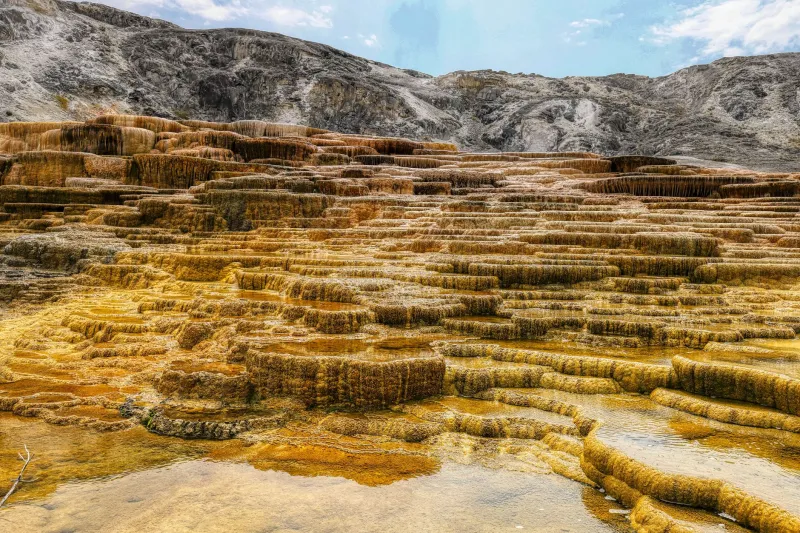
No geological formation has shaped American whiskey more profoundly than the limestone shelf that underlies much of Kentucky and Tennessee. The connection between this geology and the quality of the region's spirits is well known in broad strokes — Kentucky distillers have cited their limestone-filtered water as a point of pride for generations. What is less commonly understood is the specific mechanism by which that geology translates into flavor.
Limestone is calcium carbonate. As water percolates through it, calcium and magnesium ions are absorbed while iron is naturally filtered out. Iron is significant: even in trace quantities, it can produce harsh, metallic notes in distilled spirits and interfere with fermentation by inhibiting yeast activity. The iron-free character of Kentucky's limestone spring water is not merely a marketing claim. It is a genuine chemical advantage that contributes to the relatively clean fermentation profiles and smooth distillate character for which the region's bourbon has long been recognized.
The calcium content of this water carries its own implications. Calcium ions support yeast health during fermentation, contributing to more complete sugar conversion and, in turn, more consistent flavor development. Distillers working with Kentucky limestone water benefit from a fermentation environment that has been, in effect, pre-optimized by geology.
Hard Water, Soft Water, and the Flavor Spectrum
The distinction between hard and soft water — determined primarily by dissolved mineral content — creates meaningfully different distillation environments. Hard water, rich in calcium and magnesium carbonates, tends to support robust fermentation and can contribute subtle mineral qualities to the finished spirit. Soft water, low in dissolved minerals, produces a cleaner fermentation profile with fewer mineral-derived flavor compounds.
This distinction helps explain some of the regional flavor variation between American whiskey produced in different parts of the country — variation that cannot be attributed to grain or barrel alone.
Distilleries in the Pacific Northwest, for instance, frequently work with soft glacial meltwater drawn from mountain aquifers. This water's low mineral content contributes to the notably clean, grain-forward character that defines many craft whiskeys from Washington and Oregon — a profile that reflects the water's relative neutrality as much as the distiller's grain choices. By contrast, distilleries in the Appalachian region of Virginia and North Carolina often work with harder, more mineral-rich water drawn from ancient granite formations, contributing a subtle earthiness that distinguishes their output from both Kentucky bourbon and Pacific Northwest craft whiskey.
Texas presents a particularly interesting case. Much of the state's water supply originates from the Edwards Aquifer and other limestone formations, creating chemical profiles that bear some resemblance to Kentucky's water — though the dramatically different climate and warehouse conditions mean the resulting spirits diverge considerably in character despite sharing a geological lineage in their process water.
The Proofing Water Question
For many distillers, the most direct point of water-spirit interaction occurs not during mashing or fermentation, but at the moment of proofing — when distilled water is added to bring cask-strength spirit down to bottling proof. The mineral profile of proofing water can affect the spirit's texture, mouthfeel, and the way certain flavor compounds are perceived on the palate.
This is a point of genuine debate among distillers and sensory scientists. Some argue that the quantities of water added at proofing are too small to produce perceptible flavor differences. Others — including a number of craft distillers who use reverse osmosis systems to strip their local water of all minerals before re-mineralizing it to a specific target composition — maintain that proofing water is among the most consequential variables in final spirit character.
The practice of custom mineral blending for proofing water, borrowed in part from craft brewing, is gaining traction in American distilling. Distillers working in regions with high-iron or high-sulfate municipal water sources have particular motivation to control this variable carefully, as both iron and sulfur compounds can introduce off-notes that undermine years of careful grain and barrel work.
What the Distillers Know
Conversations with working distillers reveal a range of relationships with their water sources — from deep geological awareness to relative indifference. The most thoughtful practitioners tend to occupy a middle position: they understand their water's mineral profile, they test it regularly, and they make deliberate decisions about treatment and use, but they resist the temptation to overstate water's role relative to other variables.
What emerges from those conversations is a consistent observation: water matters most when it is problematic. A distillery with clean, mineral-balanced source water can take it largely for granted. A distillery whose local water supply carries high iron, excessive chlorine from municipal treatment, or seasonal variation in mineral content must actively manage that variable or accept its consequences in the glass.
The distilleries that have built the most consistent reputations for quality tend to be those that have taken the trouble to understand their water — whether that means celebrating the natural advantages of a limestone spring, treating a challenging municipal supply to a consistent mineral profile, or investing in a dedicated well that draws from a geology known to produce favorable water chemistry.
Drinking with Geography in Mind
For the serious collector and connoisseur, water geology offers a new lens through which to examine regional flavor differences that might otherwise seem inexplicable. Why does a particular Kentucky distillery's bourbon consistently present with a softer, rounder mouthfeel than a comparable expression from a craft producer in a hard-water region? Why does a Pacific Northwest single malt carry such a pronounced grain-forward clarity? The answers are not always found in the grain bill or the barrel program.
Sometimes, they lie beneath the distillery floor — in the aquifer, the spring, the ancient limestone shelf that has been quietly shaping American spirits since long before the first barrel was filled.