The Patient Palate: What Deliberate Pauses Teach You That Speed Never Can
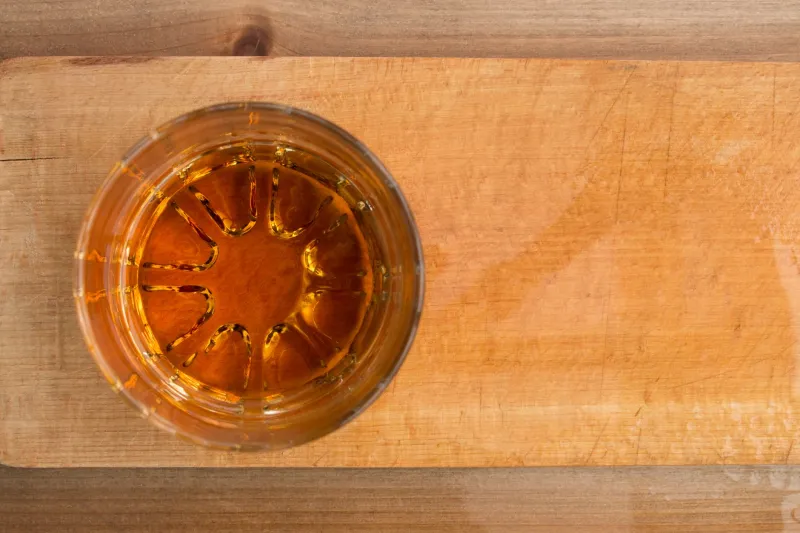
There is a particular kind of stillness that arrives between sips — a window of perception that most tasters never bother to open. At distillery events and competitive evaluations across the country, glasses are raised and lowered with the rhythm of a metronome. Dozens of expressions are assessed in rapid succession, notes are scribbled, scores are assigned, and the next bottle appears. The ritual looks authoritative. It rarely is.
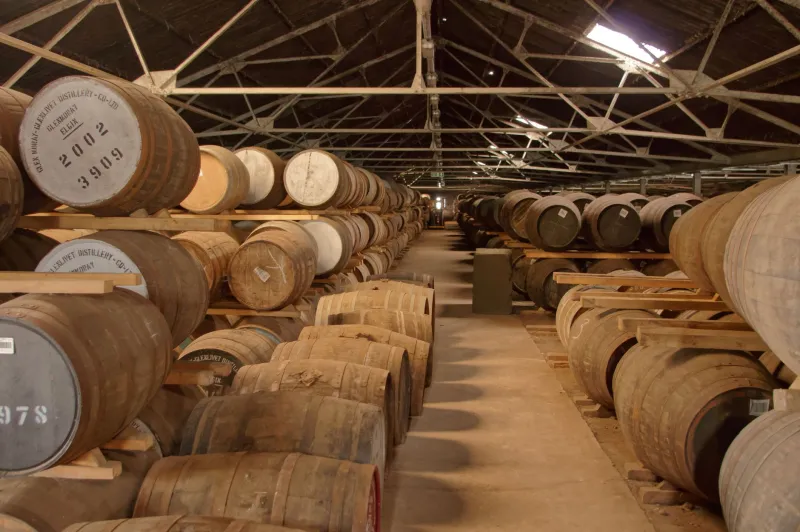
The finest spirits in the world are not built for speed. They are built for time — years in oak, seasons of temperature fluctuation, decades of patient accumulation. It follows, then, that drinking them quickly constitutes a fundamental misalignment between the spirit's nature and the drinker's approach. What the pause between sips reveals, the hurried taster will never encounter.
The Physiology of Olfactory Fatigue
The human nose is a remarkable but finite instrument. Sensory receptors in the olfactory epithelium — the tissue responsible for detecting aromatic compounds — adapt rapidly to repeated stimulation. This process, known as olfactory adaptation, means that the fifth pour in a rapid-fire tasting sequence registers far fewer distinct notes than the first. The nose, in effect, stops listening.
The implications for spirits evaluation are significant. A bourbon sampled third or fourth in a rushed flight may present as flat, one-dimensional, or unremarkable — not because of any deficiency in the liquid, but because the evaluator's sensory apparatus has been compromised by its own prior engagement. Pausing for even two to three minutes between pours allows receptor sensitivity to partially recover. Pausing longer — five minutes, ten, the length of a conversation — allows something closer to a genuine reset.
Master blenders at America's most respected distilleries understand this intuitively. Many conduct their formal evaluations over the course of an entire morning, returning to the same samples repeatedly with deliberate intervals between sessions. The goal is not efficiency. It is accuracy.
The Retronasal Dimension
Flavor perception in spirits operates along two distinct pathways. Orthonasal smell — what you detect when you bring a glass to your nose — captures volatile aromatic compounds before they enter the mouth. Retronasal smell, by contrast, occurs when exhaled breath carries those same compounds back through the nasal passage from behind. These two pathways do not always agree.
A whiskey that presents as sweet and fruity on the nose may reveal deeper savory or mineral qualities through the retronasal route. This secondary dimension of flavor is particularly susceptible to being obscured by pace. When tasting moves quickly, the retronasal phase is compressed — the drinker moves on before the exhaled breath has fully communicated what it knows. The finish, often the most compositionally complex phase of a spirit's expression, is effectively abandoned.
Slowing down grants the finish its proper duration. A long, evolving finish on a well-aged rye or single malt is not merely a pleasant afterthought. It is a continuation of the spirit's argument — evidence of structural integrity and distillation craft that deserves the same attentive consideration as the initial palate.
The Psychological Dimension of Patience
Beyond physiology, deliberate pacing carries a psychological dimension that is equally consequential. Rapid tasting invites comparison. When glasses are presented in quick succession, the mind is drawn toward contrast — this one is sweeter than the last, that one more astringent — rather than toward the internal logic of each individual spirit. Comparison is not without value, but it tends to flatten complexity into relative rankings rather than illuminate character.
Slowing down invites contemplation instead. A single glass, revisited over twenty or thirty minutes, discloses information that a comparative flight cannot. The way a bourbon's proof registers differently as the ice melts slightly in a warm room. The way a Scotch-influenced American single malt shifts as ambient temperature rises. The way the second sip, taken ten minutes after the first, seems to arrive from an entirely different bottle.
These discoveries are not incidental. They are the substance of genuine connoisseurship.
Why Tasting Events Work Against the Drinker
The format of most commercial tasting events — whether hosted by retailers, distilleries, or trade associations — is structurally opposed to the kind of attention described above. Producers want their full portfolio represented. Organizers want guests to leave satisfied with their breadth of exposure. Attendees want to feel they have received value commensurate with their ticket price.
The result is a format that privileges quantity over depth. Twenty expressions in ninety minutes is not unusual. Under those conditions, even a seasoned taster is operating at a significant sensory disadvantage by the midpoint of the evening. The bottles opened late in the lineup — often a distillery's most complex and considered expressions — are evaluated by palates already compromised by what came before.
This is not a criticism of the individuals organizing or attending such events. It is a structural observation about a format that has become so normalized it is rarely examined. The serious collector, however, would do well to treat such events as introductions rather than evaluations. A bottle that intrigues at a tasting deserves a second encounter — unhurried, solitary if possible, and conducted with the patience the spirit was made to reward.
Cultivating the Discipline of Slowness
For those accustomed to the pace of group tastings, deliberate slowness requires conscious effort. The temptation to reach for the glass again before the previous sip has fully resolved is a habit built by culture and reinforced by social context. Resisting it is a practice, not an instinct.
A useful starting point is the single-bottle evening: one expression, one glass, no comparisons. Allow thirty minutes minimum. Return to the glass at intervals. Take notes not on what the spirit is, but on how it changes — and what those changes suggest about its construction. Notice which qualities persist and which fade. Observe what the room temperature, your own mood, and the passage of time contribute to the experience.
This kind of engagement transforms spirits appreciation from an act of consumption into something closer to study. And it is only through this quality of study that the most extraordinary bottles — the ones whose complexity rewards years of patient attention — reveal the full scope of what they contain.
The silence between sips is not empty. It is where the most important information lives.