Proof and Consequence: The Uncomfortable Truth About What You're Actually Paying For in Premium Bourbon
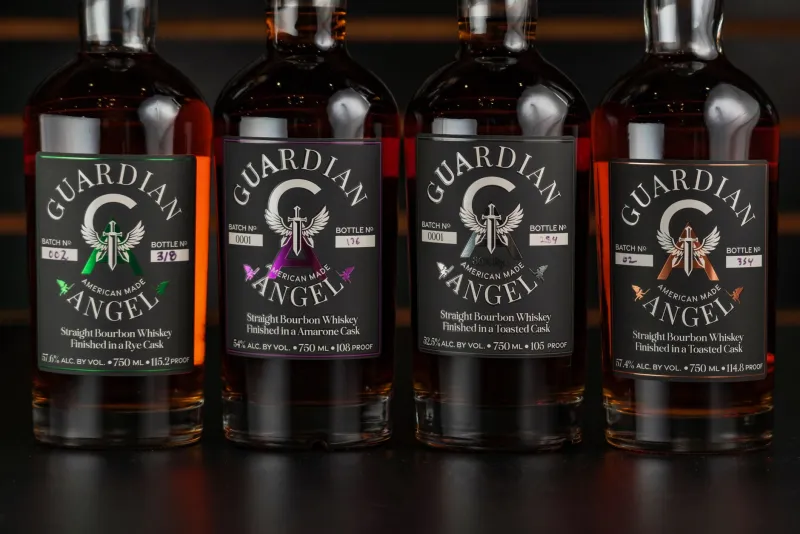
There is a particular bottle of Kentucky straight bourbon currently trading on the secondary market at roughly four hundred dollars. Its mash bill is proprietary. Its distillery is celebrated. Its label carries the quiet authority of a brand that has spent decades cultivating an image of uncompromising craft. It is also bottled at 86 proof — a modest 43 percent alcohol by volume — while a lesser-known expression from a smaller producer, available at retail for under sixty dollars, comes in at 110 proof and regularly outperforms it in independent blind tastings.
This is not an anomaly. It is a pattern. And for anyone who takes the rare spirits market seriously, it demands examination.
The Proof Problem Nobody Wants to Name
Proof is a deceptively simple metric. In the United States, it represents twice the percentage of alcohol by volume in a given spirit. A bourbon bottled at 100 proof contains 50 percent alcohol. One bottled at 86 proof contains 43 percent. The difference may sound technical, but its implications for flavor, concentration, and collector value are anything but.
Higher proof generally means more of the congeners, esters, and volatile compounds that define a whiskey's character have survived dilution. It means the wood influence, grain identity, and distillery fingerprint arrive in the glass with greater fidelity. Many of the most revered American whiskeys — George T. Stagg, William Larue Weller, Booker's — are celebrated in part because they are released at or near barrel strength, allowing the drinker to experience the spirit on its own terms.
Yet a growing segment of the premium bourbon market has quietly inverted this logic. Bottles priced at two, three, and four hundred dollars are arriving at lower proof points than their price position would suggest. The dilution is real. What is less real is any corresponding reduction in the asking price.
How Marketing Fills the Glass That Dilution Empties
To understand how this inversion took hold, it helps to consider what drives bourbon valuation in the first place. Distillery heritage, barrel age statements, single-barrel designations, limited release quantities, and the cultural cachet of certain labels all contribute to a bottle's perceived worth. None of these factors are directly related to proof.
Marketing teams understood this early. A lower proof bourbon is cheaper to produce — more bottles can be filled from the same barrel volume when water is added more liberally. A product bottled at 86 proof yields meaningfully more units than the same liquid bottled at 110. The math favors dilution. The market, it turns out, rarely notices.
Blind tasting panels conducted by independent spirits organizations have repeatedly demonstrated that consumer preference, when stripped of label recognition, does not reliably track with price. In several documented evaluations, high-proof expressions priced under one hundred dollars at retail have outscored bottles trading at multiples of that figure. The tasters were not choosing incorrectly. They were simply responding to the liquid rather than the legend.
Scarcity as Substitute for Substance
The secondary market has compounded this dynamic considerably. When a limited release sells out at retail, its price on the secondary market is determined not by what is in the bottle but by how few bottles exist and how intensely they are desired. A bourbon released in quantities of three thousand cases commands different secondary pricing than one released in thirty thousand, regardless of proof, age, or quality.
This is not inherently irrational. Scarcity has legitimate value in a collecting context — provenance, rarity, and cultural significance matter to serious collectors across every category of collectible, from fine art to vintage automobiles. The issue arises when scarcity becomes the primary driver of valuation, effectively decoupling price from the intrinsic qualities of the product.
For bourbon specifically, the consequences are measurable. A collector who acquires a bottle at four hundred dollars on the secondary market and eventually opens it may find themselves consuming a spirit that, by any objective sensory measure, delivers less intensity, less complexity, and less of the distillery's character than a bottle purchased at retail for a fraction of the cost. The investment logic may have been sound. The drinking experience may not justify the expenditure.
What the Discerning Collector Should Actually Be Measuring
None of this is an argument against collecting premium bourbon. It is an argument for collecting it more deliberately.
Proof alone is not a sufficient measure of quality — a poorly distilled spirit at high proof is still a poorly distilled spirit. But proof in combination with other indicators provides a more honest framework for evaluating whether a bottle's price reflects what is actually in it. Collectors who track proof points alongside age statements, mash bills, and distillery production methods tend to develop a clearer picture of value than those who rely primarily on brand reputation and market price.
Several practical considerations follow from this. First, independent bottlers — operators who purchase barrels from established distilleries and release them without the overhead of major brand marketing — frequently offer high-proof expressions at prices that reflect the liquid rather than the legend. Second, craft distilleries operating outside the major Kentucky and Tennessee corridors are increasingly releasing cask-strength and high-proof expressions that reward attention from collectors willing to look beyond the familiar labels. Third, retail price and secondary market price are not the same number, and the gap between them is rarely explained by what is in the bottle.
The Collector's Responsibility to the Glass
The rare spirits market is, at its best, a sustained conversation between producers who care deeply about their craft and collectors who are willing to pay for genuine excellence. That conversation becomes distorted when price functions as a proxy for quality rather than a reflection of it.
At Baron Spirits, we maintain that the most sophisticated position a collector can occupy is one of informed skepticism — not cynicism, but the kind of rigorous curiosity that asks what a bottle's price actually represents before committing to it. The answer will sometimes confirm that the premium is warranted. The heritage is real. The liquid is exceptional. The proof is honest.
Other times, the answer will be less comfortable. The proof is low. The dilution is liberal. The price reflects a marketing apparatus rather than a distillate that has earned it.
Knowing the difference is not a diminishment of the collecting experience. It is the beginning of a more honest one.